By Carol Fisher-Linn
Ever wonder how the jazz era flourished in the prohibition era? Speakeasies were major employers of jazz musicians.
Let’s go back in time more than 100 years and imagine it’s the 1920’s. Prohibition is in full swing. Yet somehow folks about town still seem to be having a good time in the after work/weekend hours. Every town in America seems to have its own entertainment going, be it mostly live jazz or phonograph. What’s obvious is that Jazz and Prohibition appeared to go hand in hand. Jazz, given due credit, was around long before those famous 20’s of the Prohibition era when the federal law restricting liquor opened the doors to a nationwide underground nightclub culture of the ‘20’s. Yet, the sounds of jazz seemed ubiquitous and can even be heard from cars trolling through the 1920’s neighborhoods. Listen. Is that Louis Armstrong’s voice heard from the radio though the open windows. Is that a signal? Is that how folks know to approach the car and order a forbidden drink? From a car? There always seemed to be ways to work around the law, it seems.
Digging through our local history it is quite clear that there were workarounds in many of our local restaurants and taverns. The traveling cars or trucks were but one way of getting around the law. Rum running was big in WNY because of our proximity to the Canadian and Pennsylvania borders. Local taverns boarded up, pretending to be closed or served booze in their basements. In “legitimate” places one might find burly lumbermen daintily drinking tea (aka) booze from teacups, or booze might have been disguised in soda or juice cocktails to hide the smell of the bathtub gin or bootleg moonshine. Who knows which one of our favorite local towns waterholes of the 1920’s had installed trapdoors, hidden wall panels and false shelves or shafts to quickly dump drinks down in case of raids?
Speakeasies were everywhere. To be honest, our current celebration of Jazz this weekend in Ellicottville might easily owe some homage to a famous mob boss who considered neighboring Olean a “safe haven” where he and many of his cronies allegedly had beautiful mansion type homes at the top of Rock City near the park. Al Capone had hundreds of clubs in Chicago where Jazz and booze soothed many a soul, so it seems logical that he had a hand in helping a few speakeasies operate in the Southern Tier. After all, they didn’t call him “Uncle Al” for nothing. And, again, it was jazz that added to the sweetness of the clubs. The Big Boys in Chicago brought in major jazz performers like Louis Armstrong and Duke Ellington and others of that genre. It turned out to be a win-win for everyone. The crime bosses made millions in profits, the Jazz musicians got name recognition to a wider audience, and their clients kept coming back.
Jazz became the “pop” music of its time (1920’s) and women moved out of the home and become more involved in the social life with the passage of the 19th Amendment, 1919-1920. Once given the right to vote, women became welcome in the many secretive lounges. Could it be that women suddenly felt freer and showed it by cropping their hair and raising their hems? These women, known as “good time girls,” were in the front lines for dances like the Charleston and the Lindy Hop.
Before the Prohibition “Jazz Age,” recordings of jazz/blues had a moderate following since 1917 and fans (mostly black) could listen on acoustic phonographs at home or on coin-operated phonographs (later to become juke boxes). Come 1920, Prohibition’s first year, a somewhat quasi-popular African American jazz singer, Bessie Smith, astonishingly sold a million records. Also, in 1920 music came more readily to people in their homes through radio. Jazz became available to those speakeasies who couldn’t afford live musicians through those coin-operated phonographs and radio. So, speakeasies like those found in Ellicottville, Olean, Salamanca, and Jamestown and surely any of the communities in our local counties flourished.
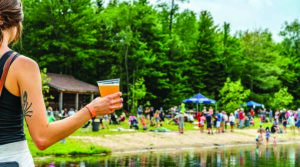
So, where there were speakeasies, there was jazz. This coming weekend, you will not have to use a secret password, handshake or drop a name like “Bugsy” to confirm who sent you. Simply wander the village and take in the soulful smooth jazz sounds coming from so many doors of our restaurants, bars and nightclubs. Get your fill of jazz and contemporary music in one square mile of fun. Park your car and walk or dance your way from pub to pub. Better still come on Friday and plan to stay through the weekend. Who would want to miss a minute of Ellicottville fun?