
Carol Fisher-Linn
Photos by Emma Rose Fisher
NY is one of the most important states for the old order Amish.
NYS has the 5th largest Amish population. Over 21,000 Amish live in NY spread across 60 settlements. This area has drawn a lot of Amish settlements over the past 20-some years with the Amish population more than quadrupling since 2000, mainly due to access to inexpensive farmland. First settled in NYS in 1831, it was more than 100 years before another one was founded in 1949 in Conewango Valley in Cattaraugus County. It is the oldest and 2nd largest in the state now with about 2500 Amish living across 18 church districts. A church district consists of congregations of twenty to forty families who become a cohesive community. Don’t look for churches. There are none. Amish believe that the church is in the bodies of the believers, not buildings. They alternate holding church services in family homes where walls can be moved, or in large workshops. On every other Sunday one will know where the services are by the large gatherings of horse and buggies parked all day at one location. The service generally goes from nine to noon (sitting on backless benches), but then everyone stays to share a communal lunch and socialize. If you were a mouse in an Amish pocket you would hear several sermons – the main one can last up to an hour – in Pennsylvania Dutch – and acapella hymns in a 4-part harmony (musical instruments are believed to be a source of worldly pride) sung from a centuries-old words-only hymnal, likely in High German.
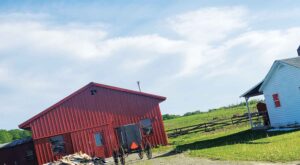
Neighboring the Cattaraugus County Amish communities, Chautauqua County is also home to Old Order Amish. Find them in eastern Chautauqua County in Cherry Creek, bordering Cattaraugus County, one of the county’s primary Amish settlements. Clymer, in the western party of the county also boasts a large settlement with multiple church districts. This is where the initial groups of Amish founded their Chautauqua County settlement in 1976. Some came from Conewango Valley, others from Ohio. Clymer hosts an Amish produce auction from May through October where commercial buyers and restaurants can purchase fresh produce. Together, the Cattaraugus and Chautauqua settlements form the western edge of New York’s Amish Trail which is a self-guided tour throughout the Amish area, including the town of Leon which is the largest Old-Order Amish community in the United States. Records show that the trail is a draw for tourists from all over the United States combined with visits to Niagara Falls, Allegany State Park (largest in NYS) or the world-famous Chautauqua Institution. Leon does offer custom tours through the Leon Historical Museum. Contact Town Historian Pat Bromley 716-296-5709 and Klayton Peterson 716-574-9883. Get your own online map at www.Amishtrail.com where you will find 202 places to explore – some not Amish-owned but in the area.
If you have the good fortune to get invited into an Amish home, you will notice wooden floors, plain unupholstered furniture, no indoor plumbing, no photos on the walls (except maybe a stray colorful calendar), oil lamps, and of course, NO electricity.
The Amish primarily came here for farming and likely every Amish farms on some level. Dairy farming was big but later some Amish branched off into more entrepreneurial endeavors and began businesses making wooden furniture, woodworked items, tinwork, toys, lumber milling, concrete forming, building construction, canvas boat covers, leather goods, cheeses, cupboards, custom kitchens and baths, bentwood rockers, footwear, hats, quilts, rugs, fabrics, baskets, flowers and plants, and don’t forget the maple syrup and fresh baked goods and canned goods.
All Amish shops are closed on Sundays. What you will find when visiting an Amish property is how the children are involved in their family endeavors, be it barefoot, straw-hatted three-year-olds pulling weeds in the family garden, girls helping with “putting up” produce, or the teen-aged boys working in the family shops and businesses. Although it presents a charming scene and it is tempting to take photographs, please remember that photographing the Old Order Amish is strictly against their religious beliefs. You can get interesting photos of their barns, gardens and even their buggies (not the people) but please respect their beliefs.
Much of the historical information in this article comes from a video by Eric Westner, The Amish In New York State, who documents the various Amish communities around the state. Thank you, Eric.