
By Bill Burk
Part II
It’s Ice Time…
Listen for it, ear to the open window where a stifling breeze pushes muggy air into the room. The summer has been hot, and relief comes in doses, a seasonal shower, a dip in the lake, a rare storm from the north. Ice time. There. The distinct roll of metal wagon wheels on brick. The start-stop jangle of the horse’s halter, the pull of the wagon traces and harness, the clatter of hooves. Ice time. Down the stairs, two at a time, careen off landings, ping-pong between railings, collide with other kids rushing to the street. Ice time. If you got to the wagon first, you might get chips of ice to suck on, before the icemen, with Popeye forearms, and rounded biceps, hoist the dripping blocks onto their shoulders and march into your home, where they slide the blocks into the family icebox’s top compartment. Fill the neighborhood with precious arctic chill. A foreman records payments, settles accounts. It’s
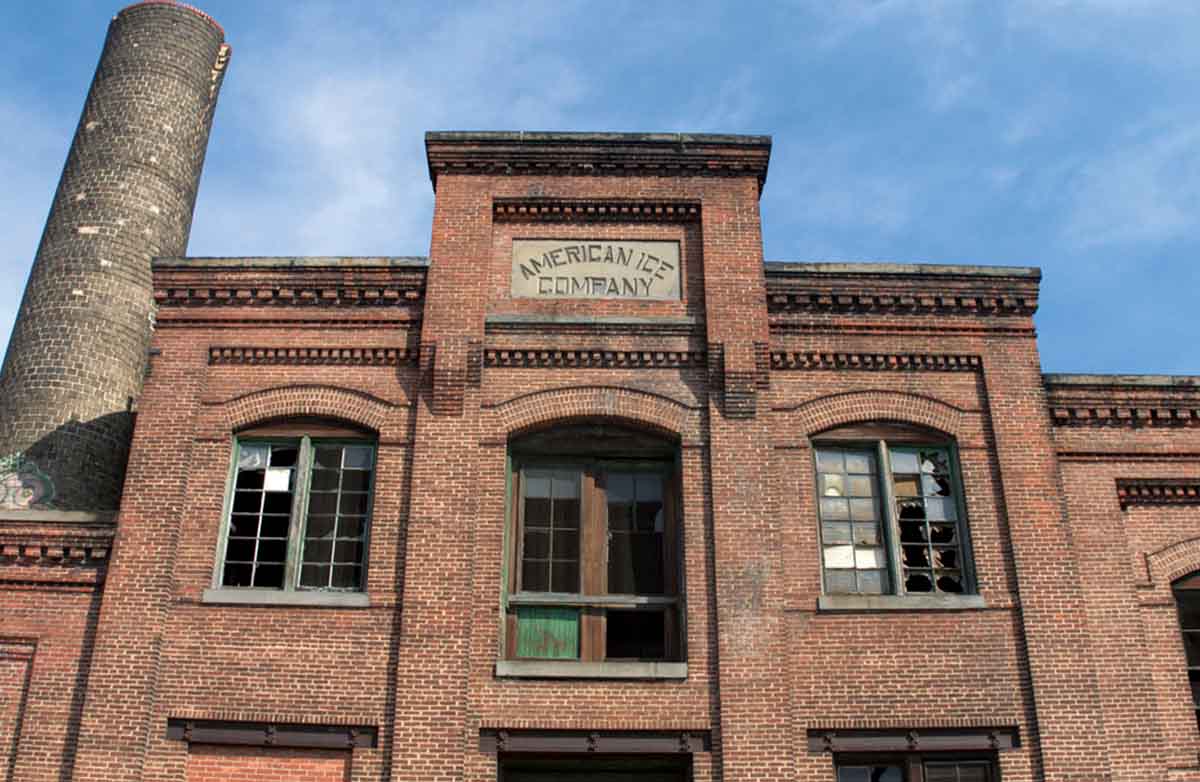
summer 1906 in Chautauqua County. Ice was both frozen water and gold. It’s refreshment and it’s blood. It’s confect and it’s life. The rhythm of summer was tied to the ice route. Families budgeted for it, scheduled meals around it, relied on it to keep food safe. Same with restaurants, breweries and distilleries, the dairy industry, fishing, meatpacking, and grocery stores. In the summer of 1906 in New York City. Ice is gold. Ice is blood. Ice is life. New York City was in the throes of an Ice Famine. The population is sweltering, and there’s no relief from the city’s ice supply. But the catastrophe was man-made. The American Ice Company and its cartel controlled most of the ice supply and they saw a market to corner. They doubled prices, halved payroll. Not a problem for families of influence, and profitable businesses that can raise prices of their own; restaurants, breweries and distilleries, grocery stores, but poor families and not-for-profit entities couldn’t afford it. Milk supplies spoil, so dairy farmers working on tight margins go broke. Hospitals are forced to ration ice, postpone surgeries or operate in dangerously warm conditions. Infection rates raise. Vaccines spoil. Antitoxins lose potency. Outbreaks worsen. Heatstroke deaths increase, with elderly and chronically ill especially vulnerable. Infant deaths surge. Newspapers call it a scandal. Politicians demand investigations, but it’s too late for the summer of 1906 in New York City. The Ice Famine becomes a symbol of how essential ice has become to public health. Southwestern, New York avoided this kind of tragedy because of the lake systems, and structural advantages. By the early 1900s, Chautauqua Lake was a major ice harvesting center. Each winter twenty to forty-thousand tons of ice were cut from the lake and stored in massive, insulated icehouses (some of which were so well built they can keep ice for a full year). Individual homes near water supplies -ponds, creeks, and the lake itself- harvested their own ice, packed it in sawdust, and stored it in root cellars. The area had multiple independent ice dealers, so no single monopoly could control the supply, and reduced the risk of price manipulation or sudden shortages. A smaller population meant demand was the lighter touch on the market’s frozen surface. In 1885 the Women’s Christian Association founds WCA Hospital in Jamestown. It built an operating room by the early 1900s and is incorporated in 1907. That means WCA Hospital was fully dependent on natural ice. Most hospitals at the time use ice for cooling an operating room, preserving medicines and serums, keeping milk safe in the maternity ward, making ice baths for fever patients, and general food storage. Chautauqua in 1906 had strong charitable networks and an overriding sense of civic responsibility. The Women’s Christian Association had deep community ties, can mobilize donations or emergency deliveries quickly. The local hospital was never affected by monopolies that sold to the highest bidder. During the Ice Famine of 1906, where New York City’s medical system struggled because of an uncaring market, WCA Hospital thrived. WCA Hospital can always find ice somewhere, even in a warm year.