By Bill Burk
I remember when Fairmount Avenue was NY Route 17J. Or maybe the street always had more than one name. In November 1973, New York State rerouted Route 17 onto the newly constructed Southern Tier Expressway (I-86), and Fairmount was redesignated NY Route 394. That change mirrored a national trend where downtowns gave way to suburban sprawl. Fairmount was a symbol of that trend. Today, NY 394 stretches from Barcelona on Lake Erie to Steamburg near the Allegany Reservation, with Fairmount Avenue serving as the vital segment linking Jamestown to Lakewood and West Ellicott.
Jamestown was settled in 1810, and Fairmount Avenue began as a modest road connecting the city center to outlying farms. Its name likely comes from the elevated terrain west of the city—“fair mounts”. By the late 19th century, Jamestown had become a manufacturing powerhouse, especially in furniture production. Fairmount evolved into a key route for transporting goods and workers between factories, rail depots, and homes, moving them into and out of Falconer, Frewsburg, and Busti.
When downtown declined as a commercial destination, groceries, electronics, restaurants, and retail turned Fairmount Avenue into Jamestown’s commercial heartbeat. Churches, schools, and community centers lined it, anchoring neighborhoods to downtown, and providing a corridor to and from the lake and outlying suburbs. Its proximity to Chautauqua Lake and the Chadakoin River made it a gateway to outdoor recreation and scenic beauty.
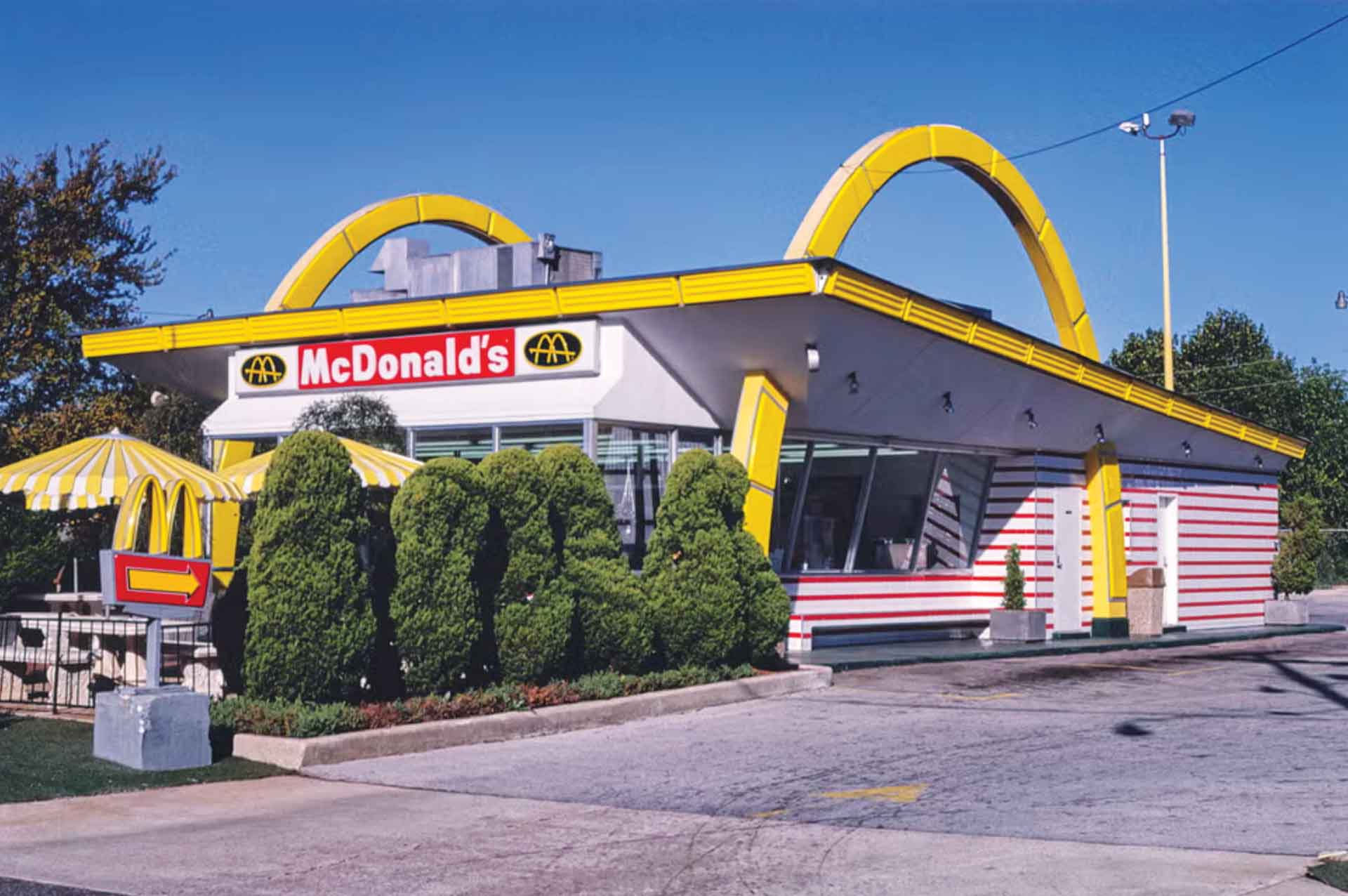
gets you fries). Later they added the bigger arches, and you could track how many millions, then billions of burgers they sold nationwide.
The post-war boom turned Fairmount into a suburban epicenter. Shopping plazas, car dealerships, restaurants, and big-box retailers sprang up, reshaping the landscape.
My childhood home, at 357 Fairmount Avenue, stood as quiet witness to the evolution of Jamestown’s most iconic corridor (the address still exists; the house doesn’t). From my driveway you turned left onto the narrow two-lane boulevard to go to McDonalds. Fast food came to town in 1973, set up across the street from Johnny’s Lunch, a bold location choice, pitting universal hamburger against iconic hot dog. The Golden Arches beckoned like Oz’s yellow-brick road, a shining example of a changing world in a small town (fifteen cents for a burger, a quarter gets you fries). Later they added the bigger arches, and you could track how many millions, then billions of burgers they sold nationwide.
Further west was Davidson’s Restaurant, famous for its classic Friday Fish Fry. Then came Zayre Plaza, its sign lit up one letter at a time like a Broadway marquee. Putt Putt golf—not mini-golf, as the putting purists insist—was added to the Zayre parking lot, only to be removed when Fairmount was widened to accommodate growing traffic patterns (much of that traffic was likely headed to Zayre Plaza to play Putt Putt). Beyond that was Lakewood with its two bowling alleys, Leisure Lanes and Flamingo Lanes, though I don’t recall which came first in line. Further west, just before 394 traced Chautauqua Lake, sat the Triangle Restaurant, home to the best Cuban sandwich in the area—or was it the Reuben sandwich and The Beechwood, on the other end of the road, had the Cuban?
East from my driveway was the Jamestown corridor. That direction was the Gaslight Motor Inn, a golden roomed wonder when it was built, with The Persian Room for formal dining, cable TV in every room, and an outdoor pool. The plaza across the street held 2001, the first disco in the area. Down the road were several stores and restaurants and from there Fairmount Avenue bled into the Chadakoin River district (McRae’s Park Historic District now), and then into Jamestown with its massive buildings and big city feel.
The duck-down roads (as we called them) to the west took you to the village of Lakewood, with a beach on the water. To the east was Celoron and Lucille Ball Park with its boat launch, playground and baseball field. From there you could take the lower road east on Jones and Gifford to meet back up with Fairmount Avenue.
Fairmount Avenue remains central to planning and investment. Revitalizing infrastructure, improving traffic flow, and supporting local businesses are ongoing priorities. Today there’s a growing interest from municipalities in making the corridor more pedestrian-friendly and environmentally sustainable.